What "enterprise-grade at startup pace" actually means
It's the line on our homepage, so it's fair to ask what we mean by it. Less a speed setting, more a way of deciding what to be slow about.
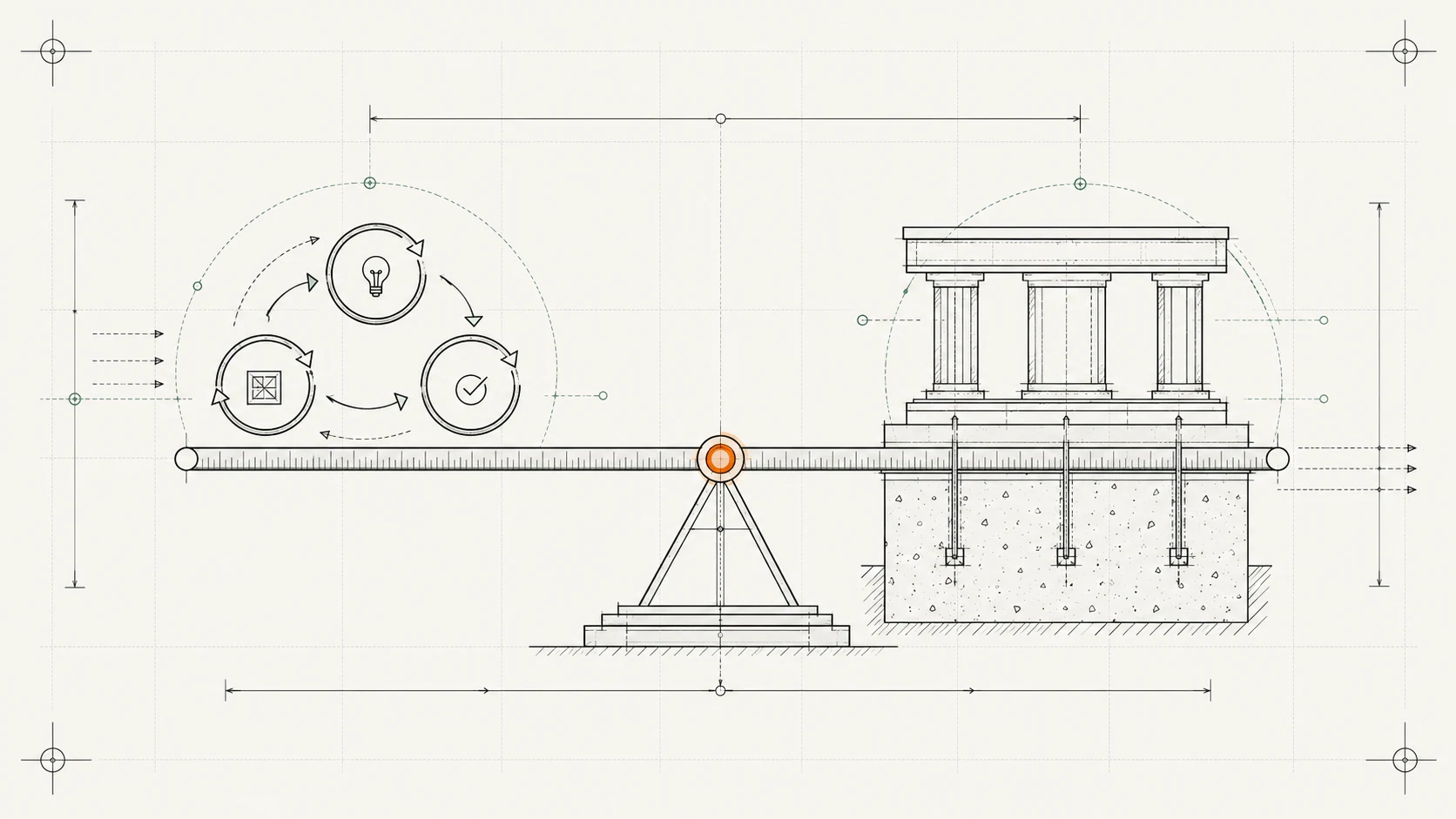
“Enterprise-grade at startup pace” is the kind of phrase that can mean nothing. Plenty of teams claim both halves and deliver neither — enterprise sludge dressed up as agility, or startup chaos with a compliance checkbox.
For us it’s not a speed dial you turn to eleven. It’s a decision about what to be slow about.
Fast where it’s cheap to be wrong
Most of a product is reversible. Copy, layout, the shape of a screen, the order of a flow — get it wrong and you change it next week. Here, speed is free. So we move fast, ship rough, and let real use tell us what’s right.
The mistake is treating reversible decisions as if they were permanent — endless design reviews for a button that could just be tried.
Slow where it’s expensive to be wrong
Some decisions are load-bearing. They’re hard to walk back and they compound:
- Data models — the shape of your data outlives every UI on top of it.
- Auth and permissions — get the boundaries wrong and every later feature inherits the bug.
- Integration contracts — the seams between systems are where outages live.
- Anything touching money, identity, or compliance.
Here we are deliberately, unfashionably slow. We write the boring document. We draw the diagram before the code.
The whole craft is knowing which kind of decision you’re holding. Speed on the reversible, care on the permanent.
Why “enterprise-grade” and “startup pace” aren’t opposites
The teams that feel slow are usually slow everywhere — the same heavyweight process applied to a typo fix and a payments rewrite. The teams that feel reckless are fast everywhere, including the places that will hurt them later.
Doing both well isn’t a contradiction. It’s just refusing to apply one speed to every decision. That’s the whole trick — and it’s why we draw the system before we build it.
Keep reading
Building something we should write about?
start a build