PL-02 · Hospitality · F&B
Multi-outlet CMS & e-commerce rollout
A multi-tenant CMS and e-commerce platform unifying content and online ordering across dozens of outlets.
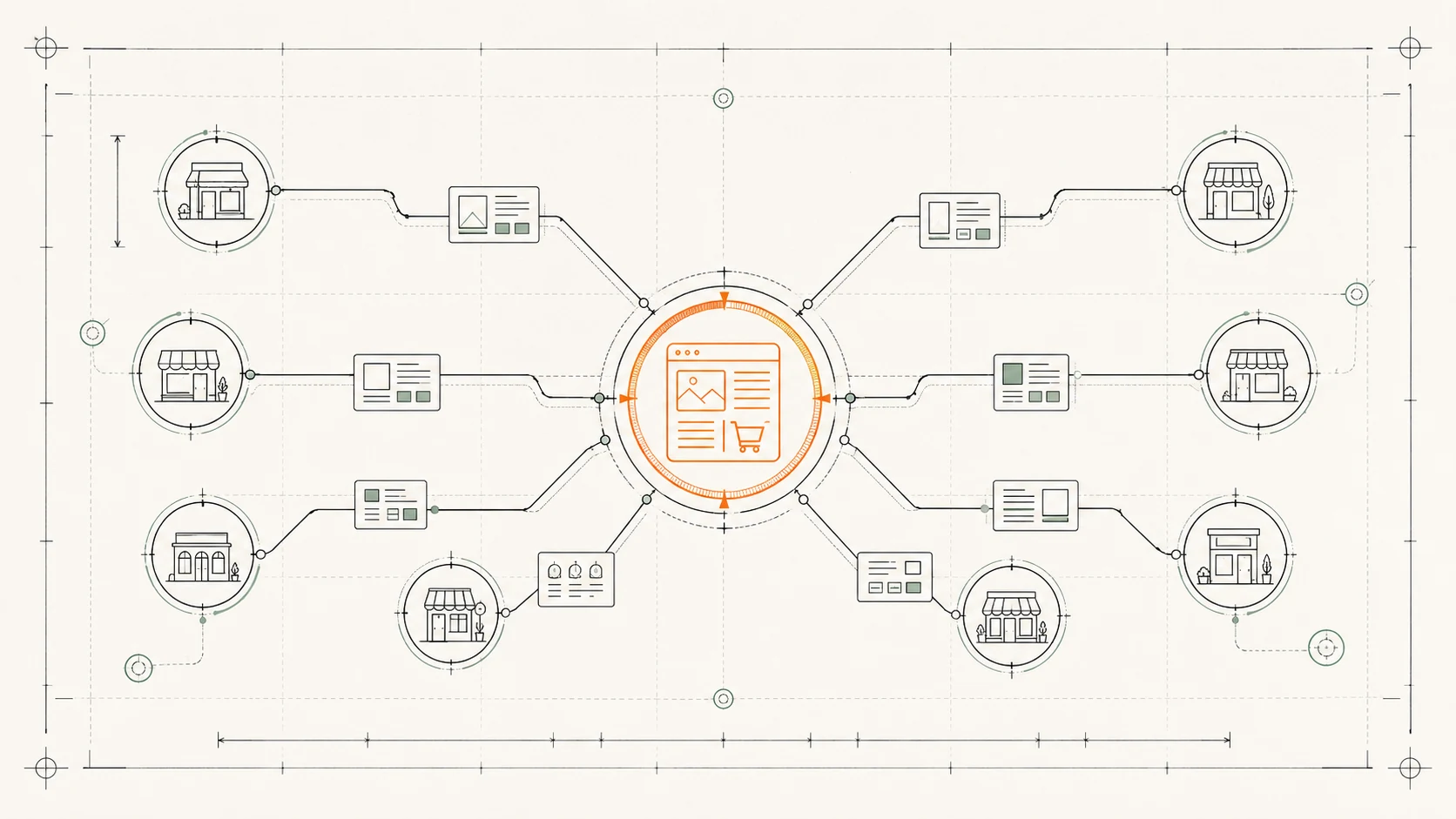
We partnered with a national hospitality and F&B group to design and implement a digital platform that unified content management and online ordering across dozens of restaurant outlets. The objective was to empower individual locations to manage their own menus, promotions, and content — while maintaining centralised control over brand identity, compliance, and customer experience.
Our solution included a custom-built CMS tailored for multi-location management, integrated with a scalable e-commerce system for online ordering. With a focus on mobile-first UX and seamless payment integration, the platform allowed each outlet to adapt quickly to local needs without compromising operational consistency. We worked closely with both the client's IT and marketing teams to ensure the system met technical, brand, and business requirements.
System shape
A multi-tenant CMS and commerce platform — per-outlet content and ordering under central brand and compliance control, on one shared, mobile-first storefront.
Constraints
- Dozens of outlets, each needing local autonomy without fragmenting the brand.
- Central control over brand, compliance, and customer experience.
- Regional payment gateways and real-time order fulfilment.
What we owned
- Designed and implemented a modular, multi-tenant CMS to support content autonomy across outlets.
- Developed a custom e-commerce engine to handle menu logic, checkout flows, and order processing.
- Integrated regional payment gateways and real-time order fulfilment tracking.
- Collaborated directly with client-side IT and marketing teams for rollout planning and training.
- Delivered a responsive, mobile-first user experience optimised for conversions.
What we deliberately avoided
- A separate site or codebase per outlet.
- Fully centralised content that stripped out local autonomy.
- A separate commerce stack disconnected from the CMS and outlet operations.
Operational result
- Reduced manual coordination by enabling outlet-level content updates and menu management.
- Improved brand consistency and customer engagement across all digital touchpoints.
- Established a scalable digital foundation that can support future features and loyalty programs.
Next
Have something like this to build?